
The Africa Cup of Nations (AFCON) 2025 is poised to deliver a captivating spectacle as teams unveil their tactical plans ahead of the group stage. From possession-oriented build-up play to rapid wide transitions, the tactical landscape across African football has evolved remarkably, mirroring global standards while retaining the continent’s distinctive flair. Coaches have emphasized adaptability, blending high pressing and hybrid formations with sophisticated data analytics to execute game plans more precisely than ever before. This tactical shift promises a unique blend of tradition and innovation that will define how teams challenge each other during the tournament’s crucial first phase.
Analyzing early friendlies and training sessions reveals that teams are consciously reshaping their approach to possession, defending, and attacking patterns. The introduction of hybrid defensive setups allows flexible responses to opposition threats, while player roles—especially in midfield creativity and fullback utilization—are undergoing substantial transformation. Rapid transitions facilitated by dynamic wingers remain a core offensive weapon, but are now combined with more patient, possession-based sequences, underscoring a new era of multifaceted strategies in African football. Observers can expect the group stage of AFCON 2025 to be as much a tactical chess match as a showcase of raw talent.
For betting enthusiasts and football fans alike, this evolution enriches the experience. Understanding these tactical trends provides a sharper edge for match analysis and prediction, as team strategies during the group stage hint at possible breakthroughs and underdog successes. With insights derived from match analysis and player roles, AFCON 2025 promises not only thrilling football but also a demonstration of how tactical innovation propels African teams onto the global stage.
In brief:
- Possession-based build-up is gaining prominence, replacing traditional reliance on counter-attacks.
- Hybrid formations allow teams to switch flexibly between defensive structures, complicating opposition planning.
- Speedy transitions and wide attacking patterns remain vital, exploiting space and pace on flanks.
- Advanced data analytics inform pressing triggers, substitution timing, and risk management.
- Player roles, particularly inverted fullbacks and creative midfielders, are critical in shaping team strategies.
Possession-Based Build-Up Play: Foundations of Control in AFCON 2025 Group Stage
The tactical narrative shaping AFCON 2025’s group stage begins with possession-based football. This approach signifies a departure from the historical African teams’ preference for direct play or rapid counter-attacks. Instead, teams are increasingly focused on maintaining control through precise passing, patient buildup, and intelligent movement—a strategy meant to dismantle defenses and dictate tempo.
Morocco emerges as a standout with their meticulous build-up play, starting attacks from the back and involving the goalkeeper actively in progressing possession. This strategic adjustment means defenders and midfielders must possess excellent ball control and vision, enabling them to penetrate opponent lines with technical proficiency. For instance, Morocco’s use of short, layered passing sequences in tight spaces has been fine-tuned during training sessions to enhance unpredictability and retain ball dominance.
Contrasting yet complementary, Senegal combines this approach with physical robustness in midfield, integrating enforcers who contribute to both ball preservation and winning duels. Such synthesis defies the outdated notion that possession-based play is at odds with physicality on the pitch. Instead, it reflects a tactical harmony between control and aggression, adding layers to the team’s strategic profile.
These possession frameworks depend heavily on pivotal player roles, especially the deep-lying playmakers who act as conduits between defense and attack. Their ability to execute precise short and medium-range passes is critical in breaking defensive blocks and transitioning fluidly. Inverted fullbacks further augment this system by stretching play wide or stepping into midfield to create overloads, an approach that disrupts the opposition’s defensive positioning. This complex, multifaceted possession strategy not only enhances control but compels opponents to evolve their own defensive setups to withstand pressure in the defensive third.
The emphasis on possession is supported by extensive match analysis, showing increased pass completion rates akin to those seen in elite European leagues. For bettors and analysts focusing on AFCON 2025 group stage dynamics, understanding which teams prioritize ball retention offers insight into their capacity to control matches and maintain tactical discipline, crucial for both live and value betting strategies. With such tactical foundations, possession-based teams hold a distinct edge in dictating group stage outcomes.
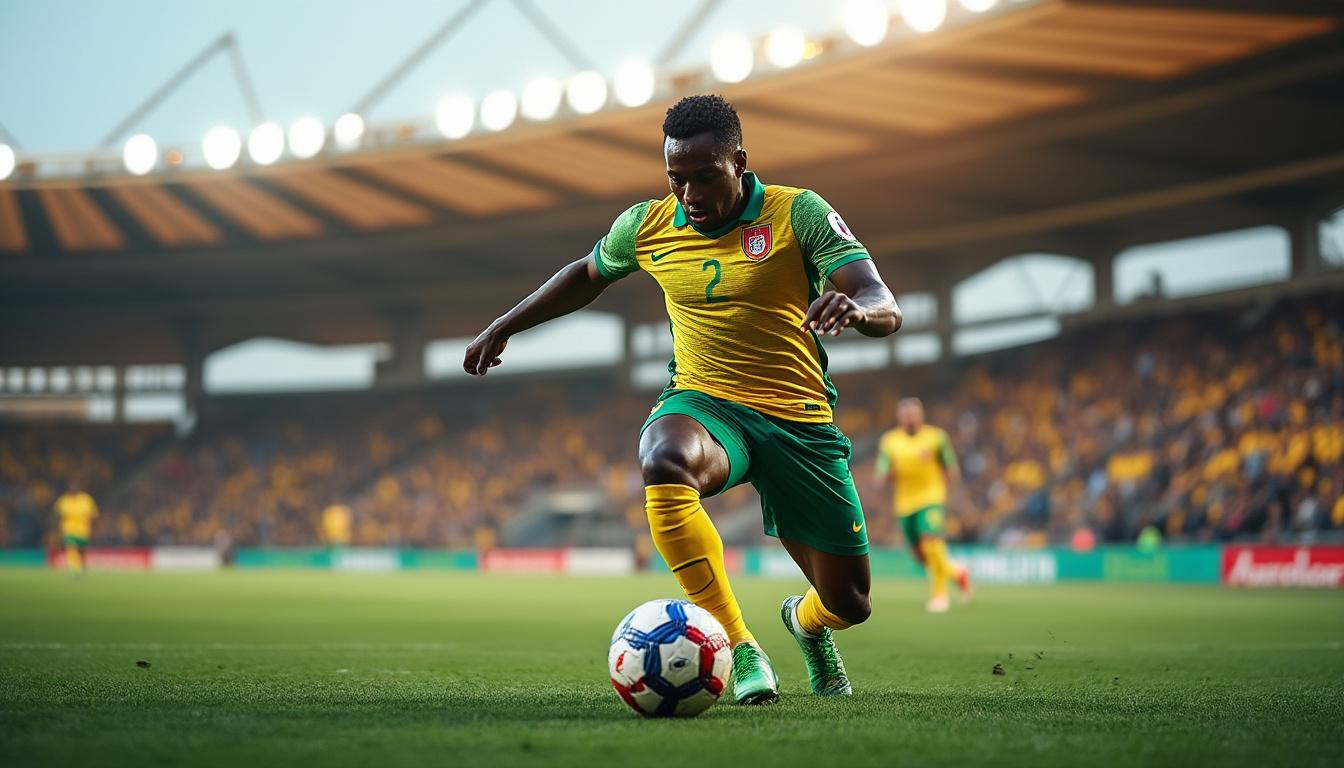
Hybrid Formations and Defensive Setups Shaping Group Stage Team Strategies
2025 marks a notable shift in defensive approaches among African national teams, with coaches deploying hybrid formations that provide in-game flexibility during the AFCON group stage. Such setups enable teams to oscillate fluidly between a three-man backline and a four-man defense, depending on the tactical demands of specific moments in a match. This dynamic prevents opponents from settling into a predictable pattern and forces constant adjustment, enhancing defensive solidity while supporting attacking transitions.
Nigeria exemplifies this trend. Under Coach Augustine Eguavoen, the Super Eagles strategically switch between a compact 3-4-3 to bolster defensive resilience and a more expansive 4-2-3-1 that advances midfield control and pressing intensity. However, tactical challenges remain, particularly in set-piece defending and goalkeeper consistency—elements that can undermine their tactical setup if left unresolved.
Integral to these hybrid formations are the roles of fullbacks and wing-backs, who assume both traditional wide defensive responsibilities and innovative inverted midfield roles depending on possession phases. The use of inverted fullbacks—who tuck inside to reinforce midfield numerical superiority—has become increasingly prevalent. Morocco, notwithstanding the absence of star fullback Achraf Hakimi in 2025, employs this strategy effectively with Noussair Mazraoui, creating controlled overloads and enhancing ball circulation under pressure.
Teams are also pioneering sophisticated pressing systems that hinge on data-driven precision. Tactical intelligence gathered from video analysis and positional tracking informs pressing triggers—specific cues when players commit to aggressive ball recovery actions. For instance, some squads adopt a selective high press targeting key opposition players, while others deploy mid-block or deep-block defenses adjusted dynamically in reaction to match flow.
This nuanced defensive approach benefits teams by increasing unpredictability and tactical resilience, making counter-attacks less effective and enabling efficient energy management. Observers and bettors tracking AFCON 2025 group stage games should pay attention to formations that flex between defensive postures, as they often dictate a team’s ability to withstand pressure and seize key moments for swift transitions.
| Team | Primary Defensive Formation | Hybrid Variations | Key Defensive Traits | Notable Player Roles |
|---|---|---|---|---|
| Morocco | 4-3-3 | 3-4-3 in possession | High pressing, positional fluidity | Inverted fullbacks, ball-playing CBs |
| Nigeria | 4-2-3-1 | 3-4-3 defensively | Set-piece vulnerability, mid-block press | Wing-backs as midfielders, versatile forwards |
| Senegal | 4-3-3 | Flexible pressing zones | Physical midfield presence, rapid counters | Midfield enforcers, quick wide forwards |
Understanding the adaptability of such defensive setups is fundamental for effective match analysis and prediction. The ability of teams to alter structure according to evolving circumstances could be decisive in tight group stage contests, offering strategic advantages that seasoned bettors recognize and exploit in live betting scenarios.
Speed, Transitions, and Wide Attacking Patterns: Offensive Catalysts in AFCON 2025
Despite the growing sophistication in possession and defensive setups, one constant remains: fast transitions and wide attacking play. In AFCON 2025’s group stage, teams continue to leverage pace and athleticism on the flanks to exploit pockets of space behind defensive lines. This tactical trend creates opportunities to catch opponents off guard, turning defense into offense with fewer touches and quicker decisions.
Players such as Senegal’s Ismaïla Sarr and Nigeria’s Ademola Lookman exemplify this explosive style, capable of surging past defenders and delivering incisive crosses or shots within seconds of ball recovery. Teams intricately choreograph overlapping fullbacks and inside runners to stretch defensive shapes and inject unpredictability into their wide play. Training focuses extensively on rapid ball circulation and positional rotation to facilitate these lightning-fast bursts.
This dual tactical personality—balancing methodical possession with sudden aggressive transitions—presents a cerebral challenge to opponents who must constantly adapt between compact defense and swift recovery runs. The result is a dynamic, engaging spectacle where the pendulum of momentum can shift swiftly, making these matches ripe for value betting opportunities.
Key aspects of this wide attacking strategy include:
- Numerical overloads on flanks: Teams create advantage zones that force defenders into dilemmas, opening crossing or cutback lanes.
- Swift decision-making drills: Players train to recognize and exploit transitional moments instantly.
- Midfield support: Central midfielders provide timely runs and passing options to sustain pressure after wide breakthroughs.
Those seeking to deepen understanding of AFCON 2025’s attacking patterns will find valuable insights in player impact analyses and betting insights centered on momentum shifts that such high-tempo styles encourage. These detailed match dynamics contribute not only to entertainment but to more informed predictions and betting strategies.
Data Analytics Revolution: Tactical Intelligence Guiding Tournament Preparation
A defining feature of AFCON 2025 is the integration of advanced data analytics into tactical decision-making. Gone are the days of relying solely on intuition. Teams now leverage sophisticated positional data, heatmaps, and video analysis to optimize pressing intensity, formation adjustments, and substitution timing during the group stage. This evolution aligns African football with global best practices, elevating tactical sophistication.
Analytical insights help identify precise pressing triggers, moments when initiating aggressive ball recovery yields maximum benefit. Coaches analyze opposition habits to time pressing maneuvers that disrupt play without exhausting players prematurely. Simultaneously, risk management strategies involve adjusting defensive lines based on opponent strengths; for example, lowering the defensive block against fleets of fast attackers, or pushing a higher line when dominating possession.
Substitution patterns benefit from detailed data too. Coaches employ statistical models to determine optimal moments for introducing fresh legs aligned with tactical needs, such as reinforcing midfield creativity or shoring up defensive stability. This empirical approach moves decision-making from guesswork to evidence-based methodology.
Teams well-versed in this tactical intelligence enjoy enhanced control over match flow, and bettors who integrate data-driven market analysis alongside these trends find compelling value in profitable betting trends. Proactive anticipation through analytics could be the differentiator in the competitive AFCON group stage, where every decision is magnified.
Nigeria’s Tactical Challenges and Adaptations: A Case Study Ahead of the AFCON Group Stage
Nigeria’s strategic experimentation and tactical introspection ahead of AFCON 2025 crisply exemplify the broader trends shaping group stage encounters. The transition between formations like 3-4-3 and 4-2-3-1 reveals the coaching staff’s search for an identity that harmonizes defensive solidity with offensive ambition. But inconsistency remains a concern, particularly in set-piece defense and goalkeeper rotation.
Players such as William Troost-Ekong and Semi Ajayi offer physical presence in defense, but the recurring vulnerability on set-pieces threatens Nigeria’s ability to close out tight matches. In goal, fluctuations between Francis Uzoho and Stanley Nwabali have created uncertainty in the last line of defense. Offensively, Victor Osimhen anchors attacks, supported by Ademola Lookman’s pace and Victor Boniface’s finishing capabilities, yet midfield creativity struggles to maintain consistent rhythm.
Nigeria’s challenges crystallize into key tactical priorities:
- Enhance midfield creativity by integrating a technical playmaker to smooth transitional phases.
- Strengthen set-piece defending through targeted training and formation adjustments.
- Establish goalkeeper consistency to build defensive confidence.
- Forge a unified tactical style that balances flexibility with clarity, ensuring cohesion.
These challenges highlight how even squads rich in individual talent require synchronized tactical frameworks to prevail. Nigeria’s journey reflects a larger AFCON 2025 narrative where adaptability, tactical intelligence, and player roles must converge perfectly during the group stage.
For those analyzing matchday key games or exploring in-depth predictions, detailed scouting reports like those available at matchday key games forums can lend valuable perspectives on how tactical decisions may play out on the pitch.
What are the biggest tactical trends influencing the AFCON 2025 group stage?
The key trends include possession-based build-up play, flexible hybrid defensive formations, rapid wide transitions, and extensive use of data analytics shaping strategic decisions.
How are hybrid formations impacting African team strategies?
Hybrid formations allow teams to switch between defensive shapes like 3-4-3 and 4-2-3-1, enhancing adaptability to different game scenarios and destabilizing opponent planning.
What role does data analytics play in tactical preparation for AFCON 2025?
Data analytics guide timing of pressing efforts, risk management in defense, substitution decisions, and provide empirical insights informing tactical adjustments during matches.
What challenges could affect Nigeria’s performance in the AFCON group stage?
Nigeria faces challenges in set-piece defense, goalkeeper consistency, midfield creativity, and developing a cohesive tactical identity to maximize the team’s versatility.
Why are quick transitions and wide attacking strategies crucial in AFCON 2025?
They exploit defensive imbalances immediately after regaining possession, using pace and spatial advantage on flanks to create goal-scoring opportunities before opponents can reorganize.